
Free Crochet Top Patterns
If sweaters feel like a big commitment, tops are the perfect place to start wearing your own crochet. This collection covers a crochet top pattern for almost any season: tank tops for summer, boleros and shrugs for layering, and ponchos for a quick, dramatic finish. Most use less yarn and fewer stitches than a full sweater, so they work up faster too.
Choose a style below to see its materials, sizing and skill level, then download the PDF and get started.
Choosing the Right Kind of Top to Make
From barely-there lace to cosy layers, tops cover a lot of ground.
1
Tank Tops
Sleeveless and breathable, a crochet tank top pattern is a great warm-weather project. Many use lace or filet stitches, which keep the fabric light and airy.
2
Boleros and Shrugs
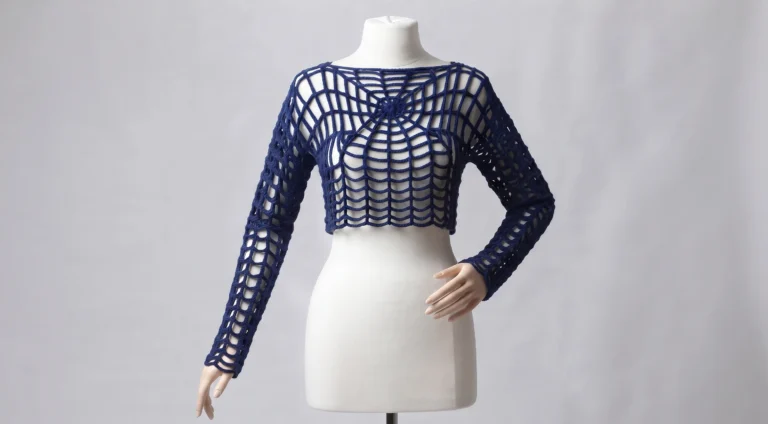
Small, cropped layers that sit over the shoulders. A crochet shrug pattern or bolero is quick to make and pairs well with dresses and vests.
3
Ponchos
Worked as one large piece or two panels, then seamed at the shoulders. Ponchos are famously beginner-friendly, since most have no armholes or fitted shaping at all.
4
Crop Tops
Cropped at the waist, often worked in simple rows or motifs. A popular pick for warm-weather outfits and festival wear.
Why Crochet Tops Are Great for Beginners
Tops are one of the friendliest ways into garment-making. Many patterns are just rectangles or triangles seamed together, with no sleeves, no collar shaping and very little fitting to worry about. A poncho is often the easiest starting point of all, since it’s usually one flat shape folded and seamed at the shoulders.
Lace and filet tops look intricate but are usually built from a repeated pattern of stitches and gaps, so once you learn the repeat, the rest of the piece follows the same rhythm.
Stitches That Suit Tops
Light, breathable fabric is what most tops are after.
Choosing Yarn for a Top
01
Lighter yarn suits most tops. Cotton and cotton blends hold their shape well and feel cool against the skin, which makes them popular for tank tops and crop tops. Fine wool or acrylic blends work nicely for ponchos and shrugs you’ll wear over other layers. Avoid very fuzzy or textured yarn for anything with detailed stitch work, since the pattern gets lost in the fibres.
02
Because tops use less yarn than sweaters, it’s often worth choosing a slightly higher-quality skein. A small amount of a nicer cotton or blend goes a long way, and the extra drape is noticeable in a finished garment.
Getting the Right Fit
Most tops are sized by bust or chest measurement, though ponchos are often one generous size. As a rough guide:
01
Fitted tank or crop top
Measured close to the body, little to no ease
02
Standard tank top
1 to 3 in (2.5 to 7.5 cm) of ease
03
Bolero or shrug
Sized to sit just past the shoulder, worn open
04
Poncho
Often one size, adjusted by neckline and length
Because tops sit close to the body, a swatch and a quick gauge check matter more here than in looser garments.
How a Bolero, Shrug and Cardigan Differ
These three overlap, but they’re not the same. A bolero is a short, cropped layer that usually ends above the waist and covers just the shoulders and arms. A shrug is similar but can be slightly longer, sometimes with ribbed cuffs. A cardigan is longer still, usually reaching the hip, with a full front opening. If you want the smallest, quickest project, start with a bolero.
Why a Poncho Is a Great First Garment
Yes, more than most garments. Many crochet ponchos are a single rectangle, triangle or circle, folded and seamed at the shoulders with no sleeves and no fitted shaping. Because the fit is loose by design, small differences in gauge rarely matter. It’s a good first garment if sweaters and fitted tops feel like too much of a leap.
Top-Making Habits Worth Building
Small choices that make a big difference in how a top wears.
Top Questions, Answered
What To Crochet Next
Love a light, wearable project? A bag or a set of accessories makes a quick next make, or go bigger with a full sweater.