
Crochet Pricing Calculator
Your project
- Select a weight…✓
- Lace / fingering✓
- Sport / DK✓
- Worsted / Aran✓
- Bulky✓
- Super bulky✓
- Direct sale / no platform✓
- Etsy✓
- Amazon Handmade✓
- Craft fair / local market✓
Suggested price
Our Free Patterns
Ready to Make Something to Sell?
Browse our free crochet patterns and find your next project.

How This Calculator Works
Enter what the project actually costs you: your material cost (yarn plus anything else that goes into the piece, like stuffing, buttons or labels), how many hours it took, and your hourly rate, the wage you want to pay yourself for that time. Add a small overhead figure for packaging, electricity and tool wear, and a profit margin on top.
Then choose where you’re selling. Etsy, Amazon Handmade, a craft fair and a direct, no-platform sale all take a different cut, and the calculator adjusts the math for whichever one you pick, including asking for your booth fee and expected item count if you choose craft fair, so that cost gets spread per item rather than forgotten.
The result gives you four numbers: a suggested retail price for your chosen platform, a minimum break-even price you should never go below, a wholesale price at the standard 50% of retail, and your effective hourly rate after fees, which is often the number that changes how people price their work once they actually see it.
Comparing Etsy, Craft Fairs, Wholesale and Direct Sales
01
Etsy
Etsy charges a 6.5% transaction fee plus roughly 3% for payment processing, plus a $0.20 listing fee per item. On a $45 item, that adds up to close to $5, nearly 11% of the sale. The calculator applies this automatically when you select Etsy as your platform.
02
Amazon Handmade
Amazon Handmade charges a flat 15% referral fee, with no separate listing fee, which is simpler to calculate but takes a bigger single bite than Etsy on lower-priced items.
03
Craft fairs
have no per-item platform fee, but you pay for the booth itself. A $60 booth fee spread across 20 items you bring to sell works out to $3 of overhead per item, and the calculator’s craft fair fields do this math for you automatically. In-person pricing also tends to run a little higher than online, since buyers can see and hold the work before deciding, and there’s no shipping cost to factor in.
04
Wholesale
Wholesale price is conventionally 50% of retail. If a local shop wants to stock your work, your retail price needs to be high enough that half of it still covers your materials, labor and overhead with something left over, which is why an underpriced retail price makes wholesale deals nearly impossible to accept.
05
Direct sale
Direct sale, selling to someone you know with no platform involved, has no fees at all, so your suggested price and your break-even price sit much closer together.
Crochet Pricing Chart; Typical Ranges by Item
These are typical yardage estimates for worsted-weight yarn at an average crochet gauge, before adding your buffer, and they double as a quick crochet blanket yarn calculator reference for the sizes crocheters ask about most. Use them as a starting point, then run your own project through the calculator above for a number based on your actual yarn weight and dimensions.
|
Item
|
Typical Hours
|
Materials
|
Suggested Retail |
Wholesale (50%) |
|---|---|---|---|---|
|
Dishcloth |
0.5 to 1 hr |
$1 to $3 |
$10 to $18 |
$5 to $9 |
|
Beanie / hat |
2 to 3 hr |
$4 to $8 |
$22 to $42 |
$11 to $21 |
|
Fingerless gloves |
3 to 4 hr |
$5 to $10 |
$28 to $48 |
$14 to $24 |
|
Scarf |
4 to 6 hr |
$8 to $18 |
$38 to $75 |
$19 to $38 |
|
Amigurumi (small) |
3 to 6 hr |
$3 to $8 |
$18 to $38 |
$9 to $19 |
|
Amigurumi (large) |
8 to 14 hr |
$10 to $25 |
$48 to $125 |
$24 to $63 |
|
Market bag / tote |
5 to 8 hr |
$8 to $15 |
$32 to $65 |
$16 to $33 |
|
Baby blanket |
10 to 18 hr |
$25 to $45 |
$65 to $130 |
$33 to $65 |
|
Throw blanket |
25 to 50 hr |
$60 to $120 |
$160 to $370 |
$80 to $185 |
|
Cardigan / sweater |
30 to 60 hr |
$50 to $120 |
$170 to $400 |
$85 to $200 |
These are starting reference points, not fixed rules. Your own hourly rate, yarn choice and finish quality all move these numbers, which is exactly why running your specific project through the calculator matters more than a generic chart.
Most popular patterns
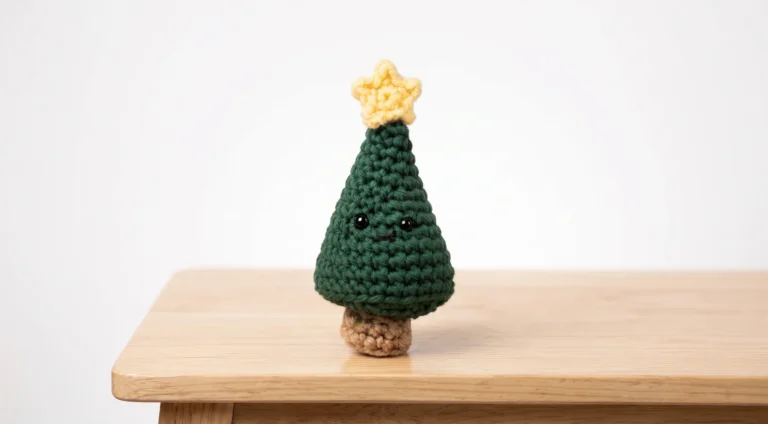
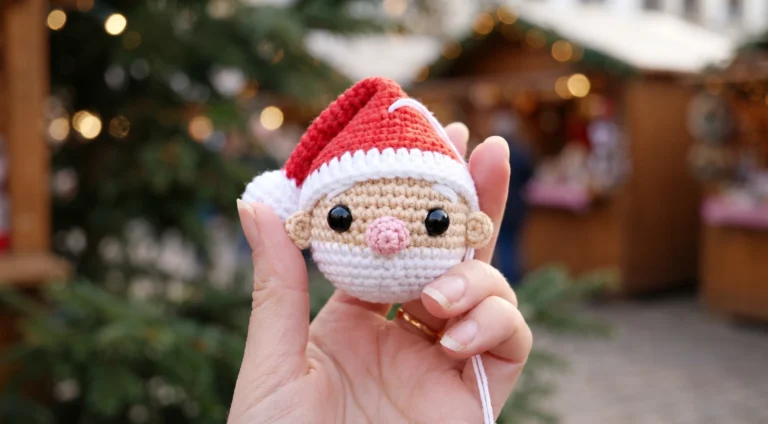
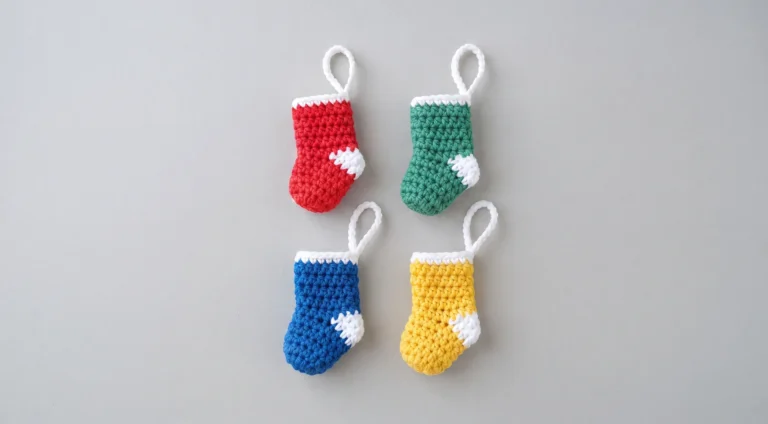
Browse the patterns everyone’s making right now, chosen by what our visitors actually download and love.
Why Pricing Handmade Work Feels So Uncomfortable
If pricing your crochet makes you uneasy, you’re not alone, and it’s worth naming why, because the discomfort usually comes from one of a few specific, common traps.
1
I enjoy it, so I don’t need to charge much
Enjoying a craft and being fairly paid for it aren’t in conflict, and in fact the opposite tends to happen: crocheters who take on paid orders at too low a price often find the joy drains out by the sixth or seventh repeat of the same item. A price that reflects your real time protects the hobby, not just the income.
2
I already had the yarn
This one comes up constantly, and the answer is the same every time: pricing is based on what it would cost to replace the materials today, not what you happened to pay (or not pay) for them originally. If using this yarn now means you’ll need to buy more before your next project, that replacement cost is real, whether the yarn was bought yesterday or gifted five years ago.
3
People won’t pay that much
Sometimes true, sometimes not, and it’s worth separating the two. The formula tells you what a fair price is based on your actual costs and time. The market tells you what people will actually pay for it. Both matter. If your honestly-calculated price is well above what your local market supports, that’s useful information, not a reason to abandon the formula, since it points you toward adjusting the project (faster patterns, less expensive yarn, smaller items) rather than quietly working for free.
4
Comparing handmade to store-bought
It’s common to hear “I can buy this for $10 at the store,” but a mass-produced item and a handmade one aren’t the same category of product, any more than a fast-fashion t-shirt and a tailored one are. Pricing to compete with a factory isn’t the goal; pricing to reflect the actual time and skill in your work is.
5
The market does push back, and that’s useful information too
In online discussions, sellers have pointed out that some handmade prices genuinely do outrun what buyers are willing to pay, especially at in-person markets, and that supply and demand still applies even to a fairly-calculated price. If something consistently doesn’t sell at your calculated price, that’s a signal to adjust the project, not necessarily the honesty of your pricing.
6
Friends and family expect a discount, or free
This is one of the most common frustrations makers share with each other: a friend who’d never ask a plumber or a hairdresser to work for free somehow assumes a handmade gift should cost “just the yarn,” or nothing at all. It helps to decide your policy before you’re asked, not in the moment. A fixed friends-and-family discount all work, as long as you pick one and apply it consistently, rather than negotiating from scratch every time and ending up resentful.
Pricing Specific Kinds of Crochet Items
Hats and gloves rely on head and hand circumference, while shawls and scarves are more flexible. As a rough guide:
Amigurumi
Amigurumi takes longer per finished inch than almost any other category, since stuffing, safety eyes, and sewing multiple pieces together all add time beyond the crochet itself. Track your actual assembly and finishing time separately from the crochet time, since it’s easy to undercount.
Garments
Garments like sweaters and cardigans use significant yarn and many hours, so their price is dominated by materials and labor rather than overhead. Factor in any blocking, seaming or button-sewing time too, not just the crochet rounds.
Blankets
Blankets are the category most likely to be underpriced, because the sheer number of hours involved (often 25 to 60 for a throw) makes the “fair” price look startling at first glance. This is exactly where the effective hourly rate figure helps: it shows you what happens to your actual pay if you discount from the formula’s suggested price.
Hats, shawls and other accessories
Hats, shawls and other accessories are usually the fastest category to finish, which makes them a good entry point for new sellers, but the low hour count can tempt makers into skipping overhead and profit margin entirely. Even a 2-hour beanie deserves its share of packaging cost and a real margin, not just materials plus a token amount.
Bags and totes
Bags and totes often use sturdier, sometimes pricier cotton yarn worked at a tighter gauge, which takes longer per row than a looser stitch. Don’t price a bag the same way you’d price a similarly-sized blanket section; the denser fabric means more hours for the same yardage.
Tops, like tanks and ponchos
Tops, like tanks and ponchos, sit between accessories and full garments in both yarn use and hours, but they’re easy to underprice if you mentally file them as “small” projects. Lace and filet stitch patterns in particular take longer to work accurately than their light finished weight suggests, so time them rather than guessing based on how the finished piece looks.
Custom or commissioned pieces
Custom or commissioned pieces, in any category, deserve a size- and complexity-based markup on top of your standard price. A custom color combination, a specific size outside your usual range, or a tight deadline all add real planning and communication time that a ready-made item doesn’t carry, and it’s reasonable to charge for that separately.
Common Crochet Pricing Mistakes
How Many Skeins to Buy
The calculator gives you two numbers: exact skeins, the precise decimal amount your project needs, and safe skeins, that number rounded up to the next whole skein plus your buffer. Always buy the safe number, not the exact one, for a simple reason: skeins are sold as whole units, and a project that needs 8.3 skeins still requires a 9th skein to finish the last stitches.
For small projects like a hat or a pair of fingerless gloves, a 15% buffer is usually enough breathing room. For large, joined or striped projects, such as a granny-square blanket or a graphghan with many color changes, a 20% buffer is safer, since every seam, join and color change adds small, easy-to-underestimate amounts of extra yarn.
If your project uses more than one color, apply the same rounding logic to each individual color, not just the total. A blanket that needs 9 skeins overall might be 6 skeins of the main color and 3 of an accent, and each of those needs its own round-up, rather than rounding the combined total once.
Pricing Calculator FAQ
What to Do Next
Not sure how much yarn your next project will need before you price it? Try our Crochet Yarn Calculator, or browse our free crochet patterns to find something new to make and sell.