How Much to Charge for Crochet Items and Stop Selling Your Work at a Loss
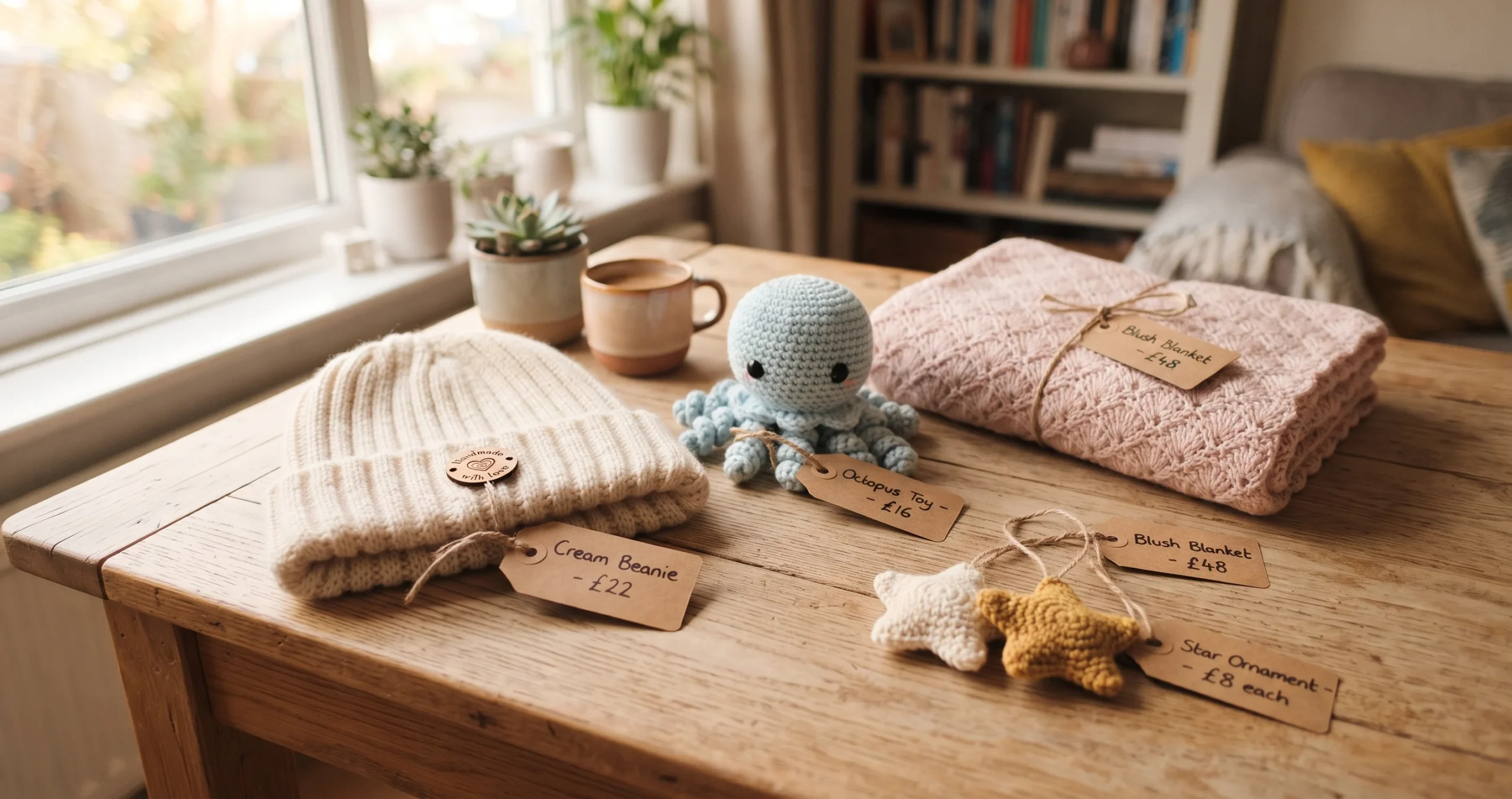
Pricing your crochet shouldn’t feel harder than making it. Here’s exactly how much to charge for crochet items, with one clear formula that works for everything from ornaments to blankets.
How Much Should You Charge for Crochet Items
To work out how much to charge for crochet, add your materials, your time, your overhead and a profit margin, then adjust the total so you still receive that amount after selling fees.
Price = Materials + Labor + Overhead + Profit, adjusted for selling fees
Here’s how each part works in practice.
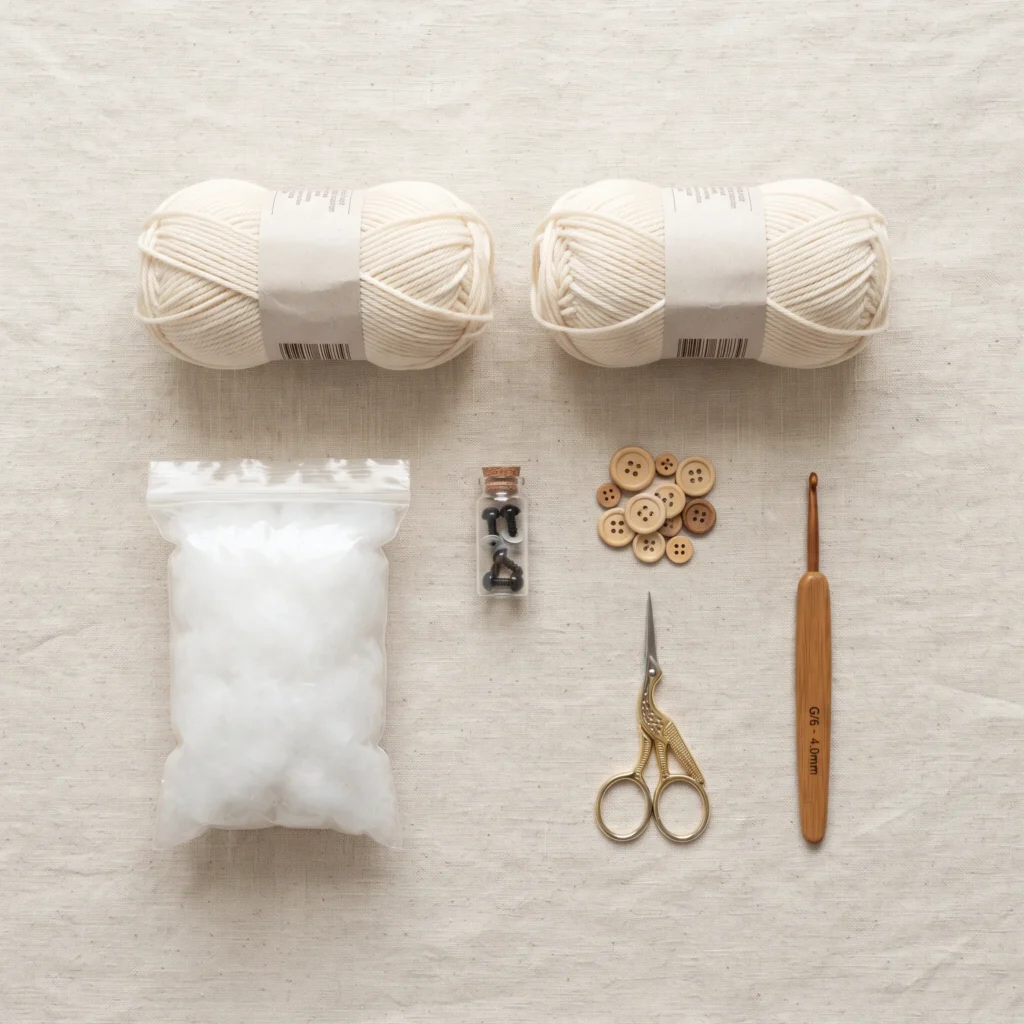
Materials include every skein of yarn plus the extras, such as stuffing, safety eyes, buttons, linings, labels and packaging. Always price yarn at what it would cost to replace today, even if it came from your stash.
Labor is your time, paid at a fair hourly rate. Many crochet sellers start between $10 and $20 an hour. Time a few projects from first stitch to last woven end, because most makers underestimate how long their work really takes.
Overhead covers the small hidden costs of making and selling, like tool wear, electricity, photography and booth fees. For most small items, $1 to $5 per item is a sensible starting point.
Profit is separate from your wage. A margin of 15% to 30% helps your craft grow, paying for new tools, better yarn and slower months.
Selling fees depend on where you sell. In the US, Etsy’s core fees usually take around 10% to 13% of each sale, Amazon Handmade takes 15%, and craft fairs charge a booth fee instead.
A quick example: a beanie with $8 of materials, 3 hours of work at $15 an hour and $2 of overhead costs $55 to make. Add a 20% margin and the price is $66. To receive $66 after Etsy fees, list it at about $74.
If your price feels too high, don’t cut your wage first. Look at where you sell, how you present your work, which patterns you choose and whether you offer smaller items at lower price points.
The rest of this guide walks through every step in detail, with a price range table for 10 popular crochet items, fee breakdowns by platform, advice for custom orders, quick answers on wholesale, consignment and sales tax, and simple ways to talk about your prices with confidence. Prefer to skip the math? Our free crochet pricing calculator does it all in seconds.
You’ve just finished something beautiful. Maybe it’s a cozy beanie, a little amigurumi friend or a blanket that took you weeks. Then someone asks the question every maker dreads: “How much would you charge for that?”
Suddenly your mind goes blank. You don’t want to scare people away, but you also don’t want to spend 20 hours making something and earn less than a cup of coffee for it.
If that feels familiar, you’re not alone. Pricing is one of the most common worries in the crochet community, and it’s also one of the most misunderstood. In this guide, we’ll walk through exactly how much to charge for crochet items, using a simple formula you can apply to anything you make. You’ll see real examples, how selling fees change your numbers, and how to feel confident when you share your price.
If you’d rather skip the math, our free crochet pricing calculator does all of this for you in seconds. But understanding how it works will help you price with confidence, so let’s start at the beginning.
Why Pricing Crochet Feels So Hard
Before we get into numbers, it helps to understand why pricing feels so uncomfortable for so many crocheters.
Crochet started as a hobby. Most of us learned crochet for fun, relaxation or creativity. When something begins as a joy, putting a price on it can feel strange, almost as if charging properly would take the love out of it.
Handmade work is invisible. A buyer sees a finished hat. They don’t see the hours of stitching, the frogging when a row went wrong, or the careful weaving in of every end. Because the effort isn’t visible, people often underestimate it, and so do makers.
Mass produced items set false expectations. Shop bought beanies cost a few dollars because they’re made by machines in huge quantities. A handmade beanie is a completely different product, but buyers sometimes compare the two.
Other sellers underprice. When you look around online or at local markets, you’ll often see crochet items priced far too low. Many makers sell for little more than the cost of yarn, which makes fair prices look expensive by comparison.
The result is that many crocheters end up working for a few dollars an hour, or even less. The good news is that a clear formula takes the guesswork and the guilt out of pricing. Once you know your numbers, you can make decisions with confidence rather than fear.
The Simple Formula for Pricing Crochet
Here’s the formula again, broken into its five parts:
- Materials: everything that goes into the item
- Labor: your time, paid at a fair hourly rate
- Overhead: the small costs of running your craft
- Profit: the extra that helps your craft grow
- Selling fees: what your platform or market takes
The first four parts give you your base price. The fifth makes sure you actually receive that amount after fees. Let’s look at each one.
Step One Work Out Your Material Cost
Materials are the easiest part to calculate, but they’re also where many makers make small mistakes that add up.
Count the full cost of your yarn. If you used two skeins at $7 each, your yarn cost is $14. If you used part of a skein, estimate the portion. For example, half of a $7 skein is $3.50.
Use the replacement cost, not what you paid. If you bought yarn on sale or used yarn from your stash, it’s tempting to count it as free or cheap. But when you sell the item, you’ll need to buy more yarn to make the next one. Always price using what it would cost to replace your materials today.
Include the extras. Small things add up quickly. Remember to count:
- Stuffing for amigurumi
- Safety eyes, buttons, zips or clasps
- Fabric lining for bags
- Leather straps or handles
- Labels and tags
- Pom poms or other trims
Not sure how much yarn a project uses? Our crochet yarn calculator estimates how much yarn and how many skeins you need for blankets, sweaters, hats, bags and amigurumi. It’s especially helpful when you’re pricing an item before you make it, such as a custom order.
Step Two Pay Yourself for Your Time
This is the step most crocheters skip, and it’s the most important one. Your time has value, and your price should reflect it.
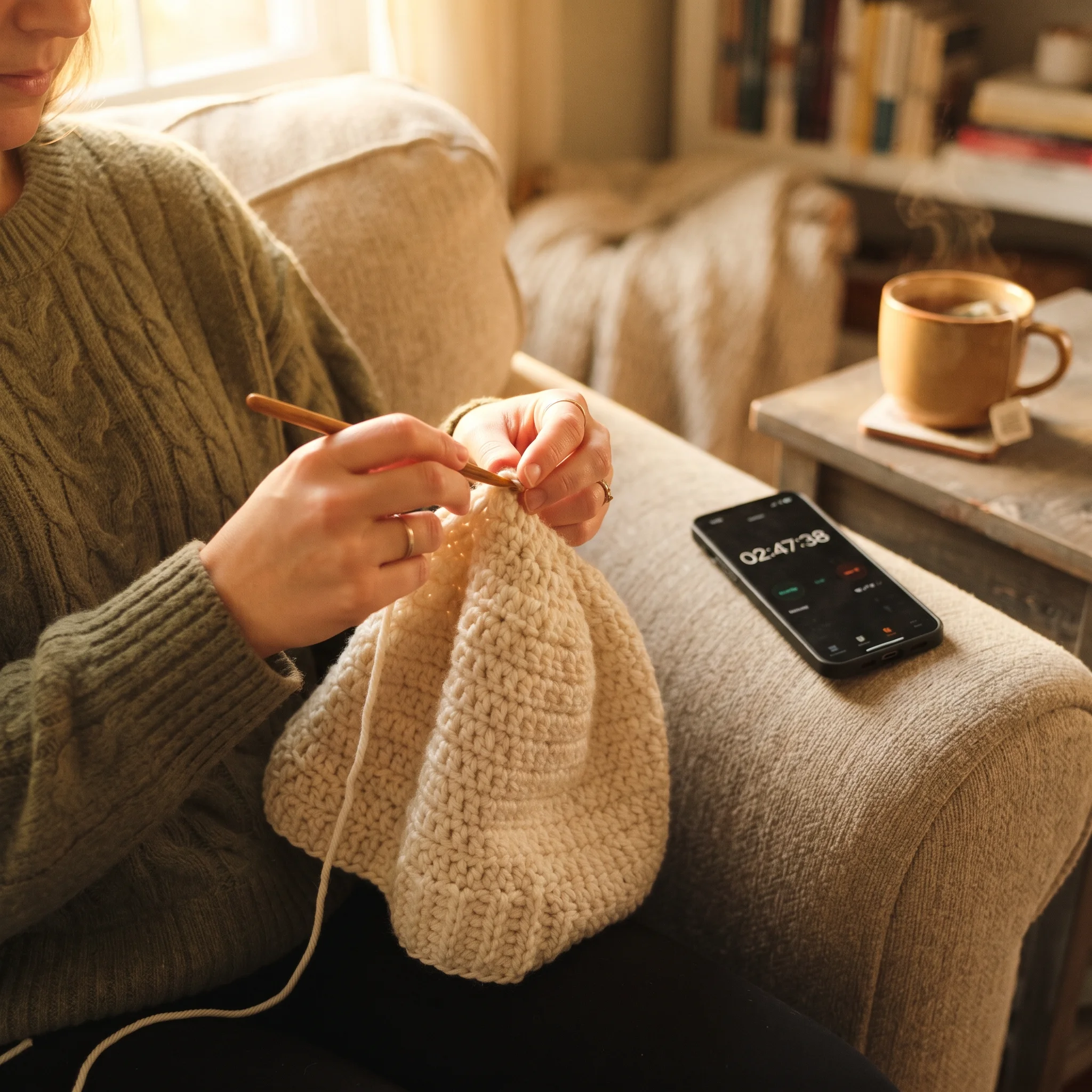
Track how long things really take. Most makers underestimate their time. Next time you make an item you plan to sell, set a timer whenever you’re working on it. Include everything: crocheting, sewing pieces together, weaving in ends, blocking and adding finishing touches. You might be surprised by the real total.
Choose a fair hourly rate. There’s no single right answer, but many crochet sellers start somewhere between $10 and $20 an hour. A good guide is to think about the minimum wage where you live and then consider your skill level. A complex cabled sweater requires more skill than a simple dishcloth, and your rate can reflect that.
Don’t punish yourself for getting faster. As your skills improve, you’ll make things more quickly. That doesn’t mean your work is worth less. Many sellers keep their prices steady as they get faster, because the quality of the finished item hasn’t changed. Some even raise their hourly rate as their expertise grows.
An alternative for very large projects. For items like blankets, some crocheters price by the amount of yarn used rather than by the hour, since timing a project that takes weeks can be difficult. If you use this method, check the result against the hourly approach now and then, to make sure you’re still earning a fair rate.
Step Three Add Overhead
Overhead covers the small, hidden costs of making and selling. Each one seems tiny, but together they matter.
Overhead can include:
- Packaging, tissue paper, boxes and mailers
- Wear on hooks, scissors and other tools
- Electricity and lighting
- Photography and props for listings
- Printing labels, business cards or care instructions
- Travel to markets or the post office
For most small items, an overhead of $1 to $5 per item is a sensible starting point. If you sell at craft fairs, your booth fee is also overhead. For example, a $60 booth fee spread across 30 items adds $2 to the cost of each one.
Step Four Add a Profit Margin
Here’s something many makers don’t realize: your hourly rate and your profit are not the same thing.
Your labor pays you for the work you did. Profit is what allows your craft to grow. It pays for new tools, better yarn, a nicer market display, website costs or the occasional slow month when sales are quiet.
A profit margin of 15% to 30% is common for handmade items sold directly to customers. If you plan to sell wholesale to shops in the future, you’ll need a larger margin, since shops usually buy at half the retail price.
To add profit, multiply your total cost by your margin. If your materials, labor and overhead come to $55 and you want a 20% margin, your price is $55 × 1.2 = $66.
Step Five Account for Selling Fees
The final step is often forgotten, and it can quietly eat away at your earnings. Every place you sell takes a share, so you need to price high enough that you still receive your full amount after fees.
Selling on Etsy
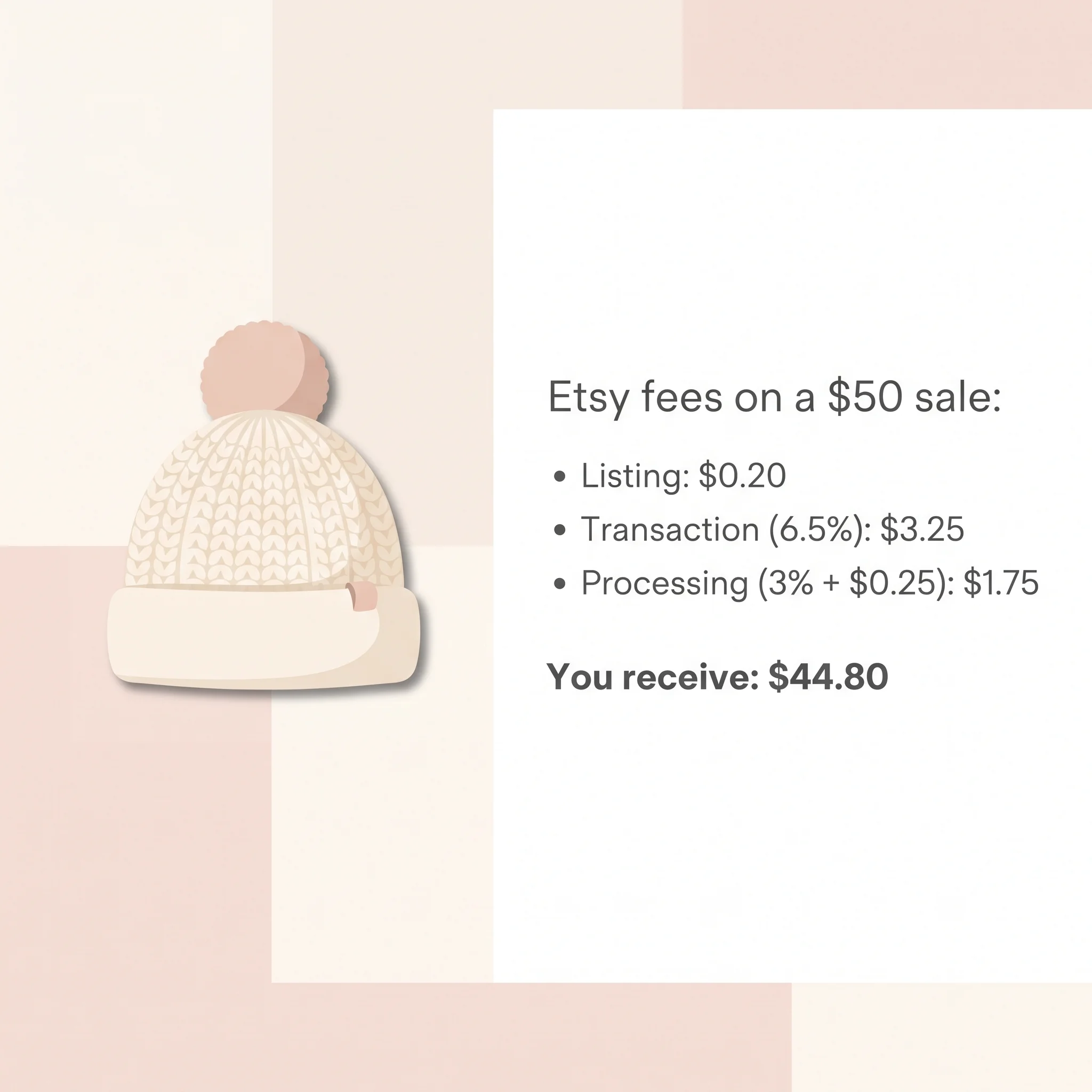
Etsy charges several fees on each sale, as set out in Etsy’s official fee policy. In the US, these include a $0.20 listing fee, a 6.5% transaction fee on the item price plus shipping, and a payment processing fee of 3% plus $0.25 per order. Some sales may also carry an Offsite Ads fee of 12% or 15% if the buyer found your item through an Etsy advertisement.
On a typical sale without Offsite Ads, Etsy fees add up to roughly 10% to 13% of the sale price. That means a $50 item earns you about $44.80 before shipping costs.
Selling on Amazon Handmade
Amazon Handmade charges a referral fee of 15% on each sale. It’s simple to calculate, but it’s higher than Etsy’s core fees, so your listed price will need to be a little higher to receive the same amount.
Selling at craft fairs and markets
At craft fairs, you usually won’t pay a percentage of each sale. Instead, your main cost is the booth or table fee, which you spread across your items as overhead. If you accept card payments, your card reader will also take a small percentage, so include that too.
Selling directly
Selling to friends, family or local customers directly is the simplest option, with no platform fees. Just remember that your time spent arranging sales and deliveries still has value.
How to adjust your price for fees
You can’t simply add the fee percentage on top of your price, because the fee is calculated on the new, higher price. The easiest way to get this right is to use our crochet pricing calculator, which works out the correct listed price for Etsy, Amazon Handmade or craft fairs automatically.
A Real Example Pricing a Crochet Beanie
Let’s put everything together with a real example. Imagine you’re pricing a simple ribbed beanie like our easy crochet beanie pattern.
Materials
- 1 skein of worsted yarn: $7
- Label and tag: $1
- Total materials: $8
Labor
- 3 hours at $15 an hour
- Total labor: $45
Overhead
- Packaging, tools and electricity
- Total overhead: $2
Base cost $8 + $45 + $2 = $55
Profit $55 × 1.2 (a 20% margin) = $66
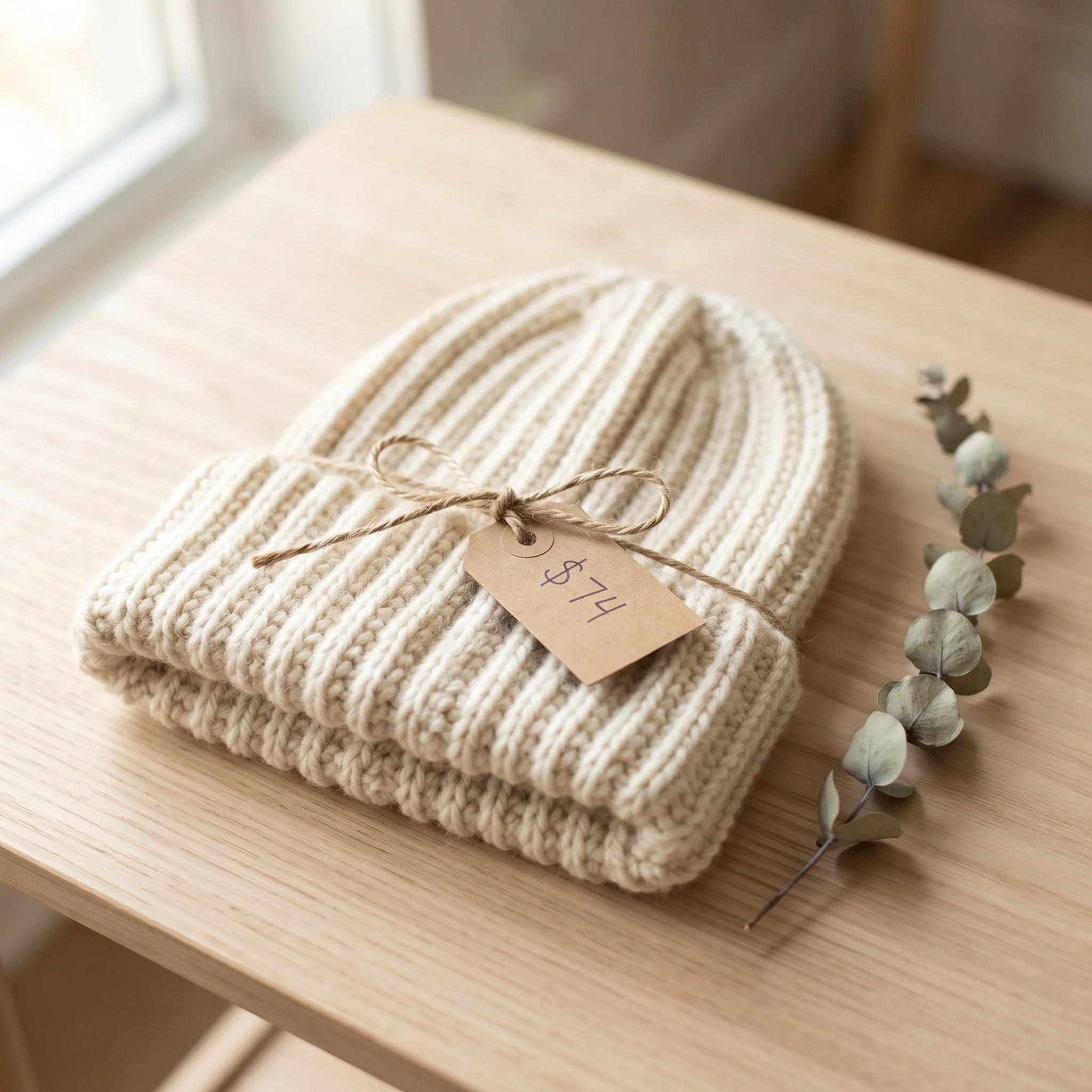
Selling on Etsy: To receive $66 after Etsy’s core fees, you’d list the beanie at around $74. The fees on a $74 sale come to roughly $8, leaving you close to your $66 target. If you charge shipping, Etsy’s transaction fee also applies to the shipping amount, so factor that into your shipping price too.
Selling at a craft fair: If your booth fee adds $2 per item, your price becomes about $68. Many sellers round this to a friendly market price like $65 or $70, depending on what feels right for their local market.
You might look at $74 and think it sounds expensive for a beanie. But look at what it includes: $45 is your wage for three hours of skilled work. That’s a fair rate, not a luxury price. This is exactly why understanding your numbers matters. When you know what’s inside your price, it’s much easier to say it out loud.
Typical Price Ranges for Popular Crochet Items
Every maker, yarn and market is different, but it helps to see some typical starting points. The ranges below use an hourly rate of $15 and include materials, but not profit, overhead or selling fees. Use them as a guide, then run your own numbers.
| Item | Typical time | Typical materials | Fair base price |
|---|---|---|---|
| Christmas ornament | 30 to 60 minutes | $1 to $3 | $9 to $18 |
| Earrings | 30 to 60 minutes | $2 to $4 | $10 to $19 |
| Scrunchie | 30 to 60 minutes | $1 to $3 | $9 to $18 |
| Small amigurumi | 2 to 4 hours | $4 to $8 | $34 to $68 |
| Beanie | 2 to 3 hours | $6 to $12 | $36 to $57 |
| Scarf | 4 to 8 hours | $12 to $25 | $72 to $145 |
| Tote bag | 4 to 8 hours | $12 to $25 | $72 to $145 |
| Baby blanket | 10 to 20 hours | $25 to $45 | $175 to $345 |
| Throw blanket | 25 to 40 hours | $50 to $90 | $425 to $690 |
| Sweater or cardigan | 20 to 35 hours | $50 to $90 | $350 to $615 |
A few things stand out. Small items like ornaments, earrings and scrunchies have low material costs and quick making times, which makes them easy to price and easy to sell. Large items like blankets and sweaters are true investment pieces, and fair prices reflect the dozens of hours that go into them.
If you’d like to make items that are quick and popular to sell, our crochet star pattern, crochet bell ornament pattern and pumpkin scrunchie pattern are great places to start. Our pattern use policy allows you to sell finished items made from any Variatee pattern, so you can make and sell with peace of mind.
What to Do If Your Price Feels Too High
Sometimes you’ll work out a fair price and feel nervous about it. That’s completely normal. Before you lower your price, consider these options instead.
Choose your market carefully: Some buyers are shopping for a bargain. Others are looking for something special and handmade. Craft fairs, boutique shops, gift markets and a well presented Etsy shop tend to attract buyers who value handmade work. Focus your energy there.
Make your work look as good as it is: Clear, bright photos, neat packaging and a short story about how each item is made all increase the perceived value. People pay more for things that look and feel special.
Offer a range of price points: Not everyone can afford a $400 blanket, but they might buy a $15 ornament or a $25 pair of earrings. Having smaller items alongside larger ones means more people can buy from you, without lowering the price of your bigger pieces.
Choose patterns that are efficient to make: Some designs take much longer than others for a similar finished result. Simple stitches, chunky yarn and clever construction can reduce your making time while keeping quality high. Our easy crochet tote bag pattern, for example, has its straps built in, which saves time on assembly.
Raise your skills, not just your speed: Unique designs, beautiful finishing and personal touches set your work apart. The more distinctive your work, the easier it is to charge a fair price.
Don’t cut your hourly rate. If your price is truly too high for the market, look for ways to reduce your time or material costs first. Cutting your own wage should be your last option, not your first.
Pricing for Etsy, Craft Fairs and Direct Sales
Your selling platform affects more than just fees. It also shapes what buyers expect.
On Etsy, buyers often compare several similar items side by side. Strong photos, clear descriptions and good reviews help justify a fair price. Remember to account for both Etsy fees and shipping costs.
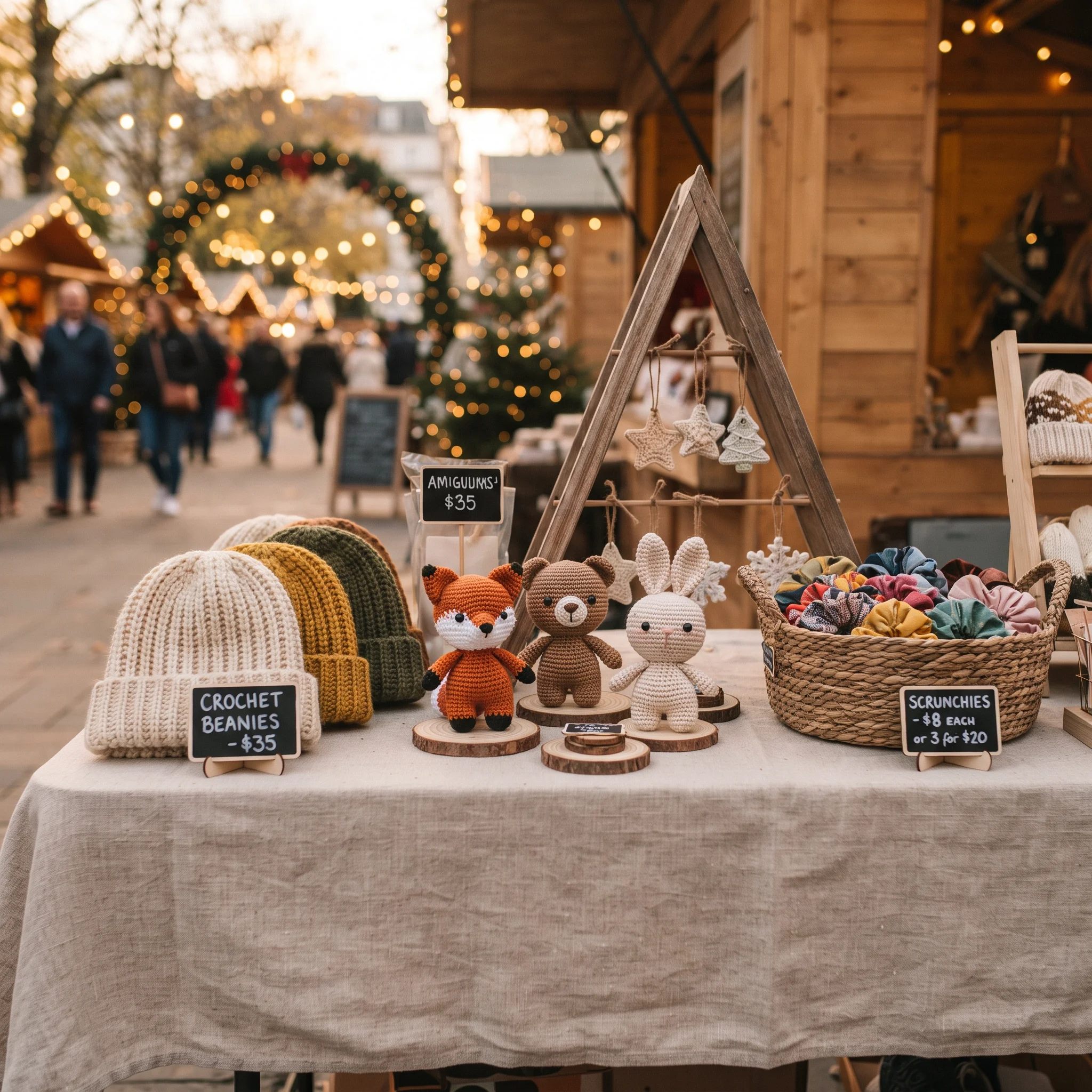
At craft fairs, buyers can touch and feel your work, which is a big advantage for crochet. Round, simple prices like $10, $25 or $40 make shopping easy and help you give change quickly. Many sellers find that bundles, such as three ornaments for $35, encourage bigger purchases. We cover this in more detail in our guide on how to sell crochet at craft fairs.
For direct sales and local orders, you have the most flexibility. You won’t pay platform fees, but you might spend time on messages, meetups or deliveries, so keep that in mind.
How to Price Custom Orders and Commissions
Custom orders are exciting, but they need careful pricing because they often involve extra work.
Ask for a deposit. Many crocheters ask for 30% to 50% upfront before starting. This covers your materials and shows the customer is committed.
Agree on details in writing. Confirm the size, colors, yarn type and deadline before you begin. A short message or email with all the details avoids misunderstandings later.
Price for extra communication. Custom work often involves more messages, sketches and photo updates. Add a little extra time to your estimate to cover this.
Charge for rush orders. If someone needs an item quickly, it may mean putting other work aside. A rush fee of 15% to 25% is common and fair.
Estimate yarn before you quote. Our yarn calculator helps you work out how much yarn a custom blanket, sweater or bag will need, so your quote covers your real material costs. For blankets specifically, our guide on how much yarn you need for a crochet blanket explains how size, yarn weight and stitch choice change the total.
Common Crochet Pricing Mistakes to Avoid
Even experienced sellers fall into these traps. Watch out for them.
Pricing for materials only: Charging just enough to cover yarn means you’re working for free. Always include your time.
Forgetting the small costs: Stuffing, safety eyes, packaging and labels add up quickly. Include them in your materials and overhead.
Guessing your time: Estimates are almost always too low. Track your real time on a few projects to get accurate numbers.
Ignoring selling fees: Fees can take 10% or more of every sale. Always price so that you receive your full amount after fees.
Copying other sellers’ prices: Other sellers may be underpricing, using cheaper materials or working much faster. Use your own numbers, then check the market as a final reality check.
Using the same price everywhere without checking fees: A price that works at a craft fair might lose you money on Etsy once fees are taken out. Check your numbers for each place you sell.
Giving big discounts too often: Occasional sales can be useful, but constant discounts teach buyers to wait and can make your full prices look unrealistic.
How to Talk About Your Prices With Confidence
Knowing your numbers is half the battle. The other half is feeling comfortable sharing them.
Explain the value, not the cost: Instead of apologizing for your price, share what makes the item special. For example: “Each beanie is handmade in soft wool blend yarn and takes about three hours to make.”
Have a friendly answer ready; If someone says your price is too high, you don’t need to argue. A simple, warm reply works well: “I understand. Handmade pieces take a lot of time, and I price them fairly for the work involved.”
Set clear boundaries with friends and family: It’s lovely to make gifts, but if friends ask you to make items for them, it’s okay to charge. You might offer a small friends and family discount, while still covering your materials and some of your time.
Remember who you’re pricing for: Your ideal customers are people who value handmade work. Not everyone will buy, and that’s perfectly fine. The right customers will appreciate your work and come back for more.
Quick Answers to Related Crochet Selling Questions
Pricing is only one part of selling crochet. These are the questions that usually come next, with short answers and links to our detailed guides.
How Keystone Pricing Works for Wholesale
Keystone pricing means a shop buys your work at half its retail price, then sells it at full price. If your retail price is $60, a shop will usually pay $30. That only works if $30 still covers your materials, time and overhead. Many crocheters find wholesale difficult for slow, large items like blankets, but it can work well for quick makes such as ornaments, earrings and scrunchies. Our pricing calculator shows a wholesale price automatically, so you can check whether it’s worth it.
Pricing Crochet for Consignment Shops
With consignment, a shop displays your work and only pays you when it sells, usually keeping 30% to 40% of the sale price. Treat that commission like a selling fee. If you want to receive $50 and the shop keeps 35%, your shelf price needs to be about $77. Agree on the split, how long items stay in the shop and who covers damage before you hand anything over.
Sales Tax on Handmade Crochet
Whether you need to collect sales tax depends on where you live and where you sell. In the US, Etsy collects and pays sales tax for you in most states as a marketplace facilitator, so you usually don’t add it yourself on Etsy. At craft fairs or for direct sales, rules vary by state and country. Check with your local tax office, because this guide isn’t tax advice.
How Much Yarn a Crochet Blanket Needs
A throw blanket in worsted weight yarn often needs around 1,800 to 2,500 yards, but the real amount depends on size, stitch and yarn weight. Since yarn is usually the biggest material cost for blankets, getting this right matters for your price. Our guide on how much yarn you need for a crochet blanket explains why estimates vary so much, and the yarn calculator gives you a number for your exact project.
How Long a Crochet Blanket Takes to Make
A baby blanket usually takes 10 to 20 hours, and a throw often takes 25 to 40 hours or more. Chunky yarn and simple stitches are much faster, which is why a chunky blanket can be a good choice if you want to sell blankets at a realistic price. Our easy crochet blanket pattern uses a jumbo hook and a simple four row repeat, so it works up quickly.
Which Crochet Items Sell Best
Quick, giftable items often sell best because they’re easy to buy on impulse and fair to price. Ornaments, earrings, scrunchies, small amigurumi and beanies are popular at markets and online, especially around the holidays. Our Christmas crochet patterns are a great starting point for seasonal stock, and our upcoming guide on which crochet items sell best goes deeper into what’s worth your time.
Etsy Fees in Plain English
Etsy fees come in three main parts on a US sale: a listing fee, a transaction fee on the item and shipping, and a payment processing fee. Offsite Ads can add more on some orders. The key point for pricing is that fees come out of your sale price, so you must price above your target. Our upcoming guide to Etsy fees for crochet sellers breaks down every fee with examples.
Pricing Items Made With Premium Yarn
Wool, merino, alpaca and cotton blends usually cost more than acrylic, and buyers who value natural fibers expect to pay more for them. Always price premium yarn at its full replacement cost and mention the fiber in your listing, since “100% merino” adds real value in a buyer’s eyes. Our guide to yarn weights and substituting yarn explains how swapping yarn changes cost and size.
Making Finished Items Worth the Price
Finishing is where handmade work earns its value. Neatly woven ends, straight edges and careful blocking make an item look professional, and buyers notice the difference. Blankets and garments especially benefit from blocking, which evens out stitches and helps them drape beautifully. Our guide on how to block crochet blankets, granny squares and sweaters shows you exactly how.
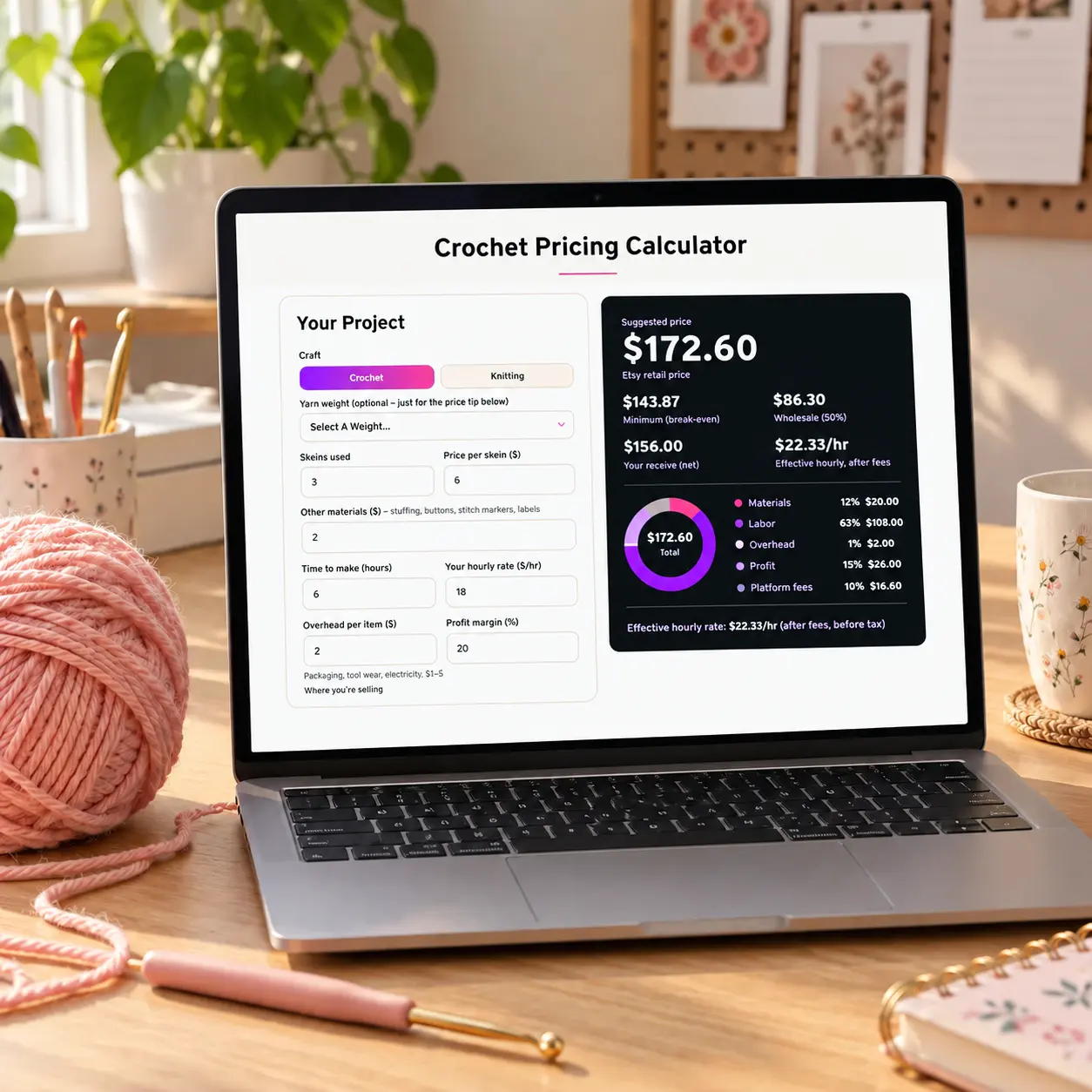
Use the Free Crochet Pricing Calculator
You now understand every part of a fair crochet price. To save time, our pricing calculator brings it all together in one place.
Enter your yarn and material costs, your making time, your hourly rate, overhead and profit margin, then choose where you’re selling. The calculator instantly shows:
- A suggested selling price
- A minimum break even price
- A wholesale price
- What you actually receive after fees
- Your real hourly rate after fees
It works for Etsy, Amazon Handmade, craft fairs and direct sales, so you can compare prices for every place you sell. It’s free, quick and designed to help you charge what your work is truly worth.
Frequently Asked Questions
Price Your Work Like It Matters, Because It Does
Pricing crochet doesn’t have to feel uncomfortable or confusing. When you add up your materials, your time, your overhead, a fair profit and your selling fees, you’ll arrive at a price that’s honest, sustainable and fair to both you and your customers.
Your skill, your time and your creativity all have value. Charging properly isn’t greedy. It’s what allows you to keep doing the craft you love.
Ready to work out your prices? Try our crochet price calculator, then explore our free crochet patterns to find your next project to make and sell.
Work Out Your Price in Seconds