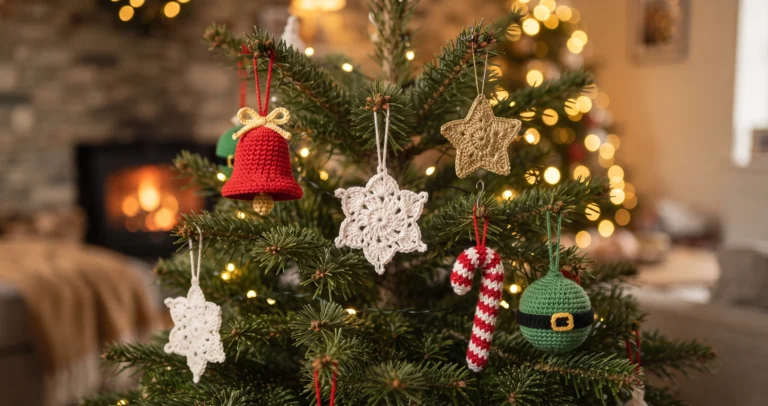
How to Stiffen Crochet With Glue, Starch, Sugar or Stiffener
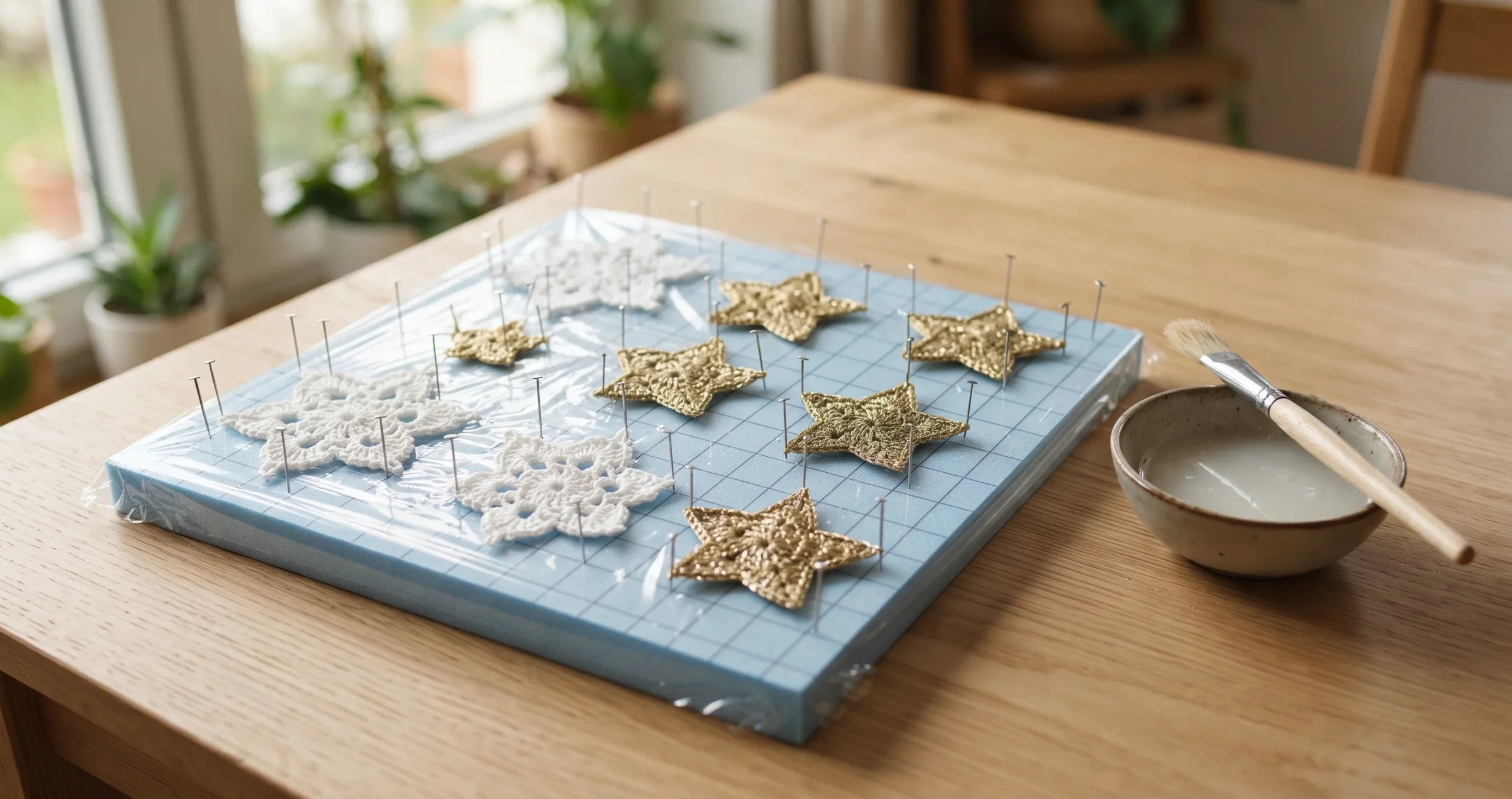
Floppy snowflakes, sticky ornaments and drooping stars are so frustrating after all that careful stitching. Here’s how to stiffen crochet with glue, starch, sugar or fabric stiffener, with clear ratios for every project.
What Is the Best Way to Stiffen Crochet
The most reliable way to stiffen crochet at home is a mix of equal parts white PVA glue and water, or a commercial fabric stiffener. Soak the piece, gently squeeze out the excess, pin it into shape on a plastic covered board and let it dry completely, usually overnight.
Choose your method by project:
Snowflakes, stars and lacy ornaments. Glue and water (1:1) or fabric stiffener for crisp, lasting points.
Thread earrings and jewelry. Glue and water (1:1), which keeps them light and firm.
Doilies and soft decor. Starch gives a gentle, natural finish that’s easy to redo.
Baskets and bowls. Full strength fabric stiffener or a stronger glue mix (2 parts glue to 1 part water), shaped over a bowl or balloon.
Sugar water gives a beautiful traditional finish, but it attracts ants, turns sticky in humid weather and can yellow over time, so it’s best saved for dry climates and short term displays.
Remember: every homemade stiffener is water based, so stiffened crochet can’t be washed. If it softens, simply stiffen it again.
Three habits make the biggest difference: test your mix on a small swatch first, clear any film from the lacy holes before it dries, and pin opposite points in turn so the shape stays even. Cotton yarn and thread absorb stiffener best, while acrylic may need a second coat.
Below you’ll find step by step instructions for every method, clear ratios, a project by project guide and fixes for common problems like stickiness, shine and yellowing.es, gift ideas for everyone on your list, a stress free planning timeline and tips for wrapping and selling your makes.
You’ve just finished a beautiful crochet snowflake. It’s lacy, delicate and full of tiny picots. Then you hold it up, and it flops over like a wet tissue.
That moment happens to almost every crocheter who makes ornaments, doilies or jewelry. So you search for how to stiffen crochet, and the advice is all over the place. One site says equal parts glue and water. Another says two parts glue. A third says six parts water. Someone swears by their grandmother’s sugar recipe, while another warns that sugar attracted ants to their Christmas tree. Others complain that their ornaments turned sticky, shiny or yellow.
No wonder it feels confusing. Many of the most cited guides are old forum threads or single experiments, and few explain which method suits which project.
This guide brings it all together. You’ll learn how each method works, the ratios to start with, which method is best for snowflakes, earrings, bells, doilies and baskets, and how to fix the problems people run into most often. By the end, you’ll know exactly how to give your crochet crisp, lasting shape.
Why Crochet Needs Stiffening
Crochet is a soft, flexible fabric. That’s wonderful for blankets and sweaters, but it’s a challenge for anything that needs to hold a shape on its own.
Lacy pieces like snowflakes and stars have open spaces and thin chains that bend easily. Ornaments that hang need to keep their points without drooping. Three dimensional pieces like bells, bowls and baskets need to stand up without collapsing.
Blocking and stiffening are not the same thing. Blocking uses water or steam to relax the fibers and set the shape, which works well for blankets and garments. Stiffening goes further by coating the fibers with something that hardens as it dries. If you only need flatter, neater edges, blocking may be enough. If you need a piece to hold a firm shape, you need to stiffen it. Our guide on how to block crochet blankets, granny squares and sweaters explains blocking in detail.
Which yarns stiffen best? Cotton and cotton blends absorb stiffeners beautifully and hold crisp shapes, which is why they’re so popular for ornaments and doilies. Wool works too but stays a little softer. Acrylic absorbs less, so it often needs a stronger mix or a second coat.
The Five Main Ways to Stiffen Crochet
Here’s a side by side comparison of the five most common methods.
| Method | Stiffness | Finish | Handles humidity | Attracts pests | Best for |
|---|---|---|---|---|---|
| Commercial fabric stiffener | High | Clear, slightly firm | Good | No | Ornaments, baskets, bowls |
| Glue and water | Adjustable, low to high | Clear, can be slightly shiny | Good | No | Snowflakes, stars, jewelry, garlands |
| Starch | Low to medium | Natural, soft | Fair | Rarely | Doilies, soft decor |
| Sugar water | High | Traditional, hard | Poor, turns sticky | Yes | Doilies and baskets in dry climates |
| Spray starch or hairspray | Low | Natural | Poor | No | Quick touch ups |
There’s no single best method for everything. The right choice depends on your project, your climate and how long you want it to last. Let’s look at each one.
Method One Commercial Fabric Stiffener
Commercial fabric stiffeners are ready made liquids sold in craft shops. They’re designed specifically for fabric and yarn, which makes them the most predictable choice.
Why people love it
- Consistent results every time
- Dries clear and firm
- Handles humid weather well
- Doesn’t attract pests
- Can be used full strength for maximum stiffness or diluted for a softer finish
How to use it
- Cover your work surface with plastic or wax paper, since stiffener sticks to whatever it dries on.
- Pour some stiffener into a shallow dish. Dilute with water if the product allows and you want a lighter result.
- Submerge your crochet piece and gently squeeze so the stiffener soaks right into the fibers.
- Lift it out and squeeze out the excess without twisting or wringing.
- Shape and pin it, then let it dry completely.
Good to know. Always follow the instructions on your specific product, since strengths and dilution ratios vary between brands. Commercial stiffener costs more than homemade options, but for items you want to keep for years, such as heirloom ornaments or gifts, many crocheters feel it’s worth it.
Method Two Glue and Water
Glue and water is the most popular homemade method, and for good reason. It’s cheap, easy, dries clear and lets you control exactly how stiff your crochet becomes.
What glue to use
Use white PVA glue, the same kind as school or craft glue. It’s water soluble, so it mixes easily, it dries clear and it doesn’t give off strong fumes. Decoupage mediums also work in a similar way.
Starting ratios
The amount of water controls the stiffness. More glue means a firmer result. More water means a softer, more natural feel.
| Glue to water | Result | Best for |
|---|---|---|
| 2 parts glue to 1 part water | Very stiff, can look slightly shiny | Baskets, bowls, 3D shapes |
| 1 part glue to 1 part water | Firm, all purpose | Snowflakes, stars, ornaments, earrings |
| 1 part glue to 2 parts water | Light but crisp | Larger flat pieces, garlands |
| 1 part glue to 4 to 6 parts water | Soft hold, very natural look | Fine thread snowflakes and doilies |
How to use it
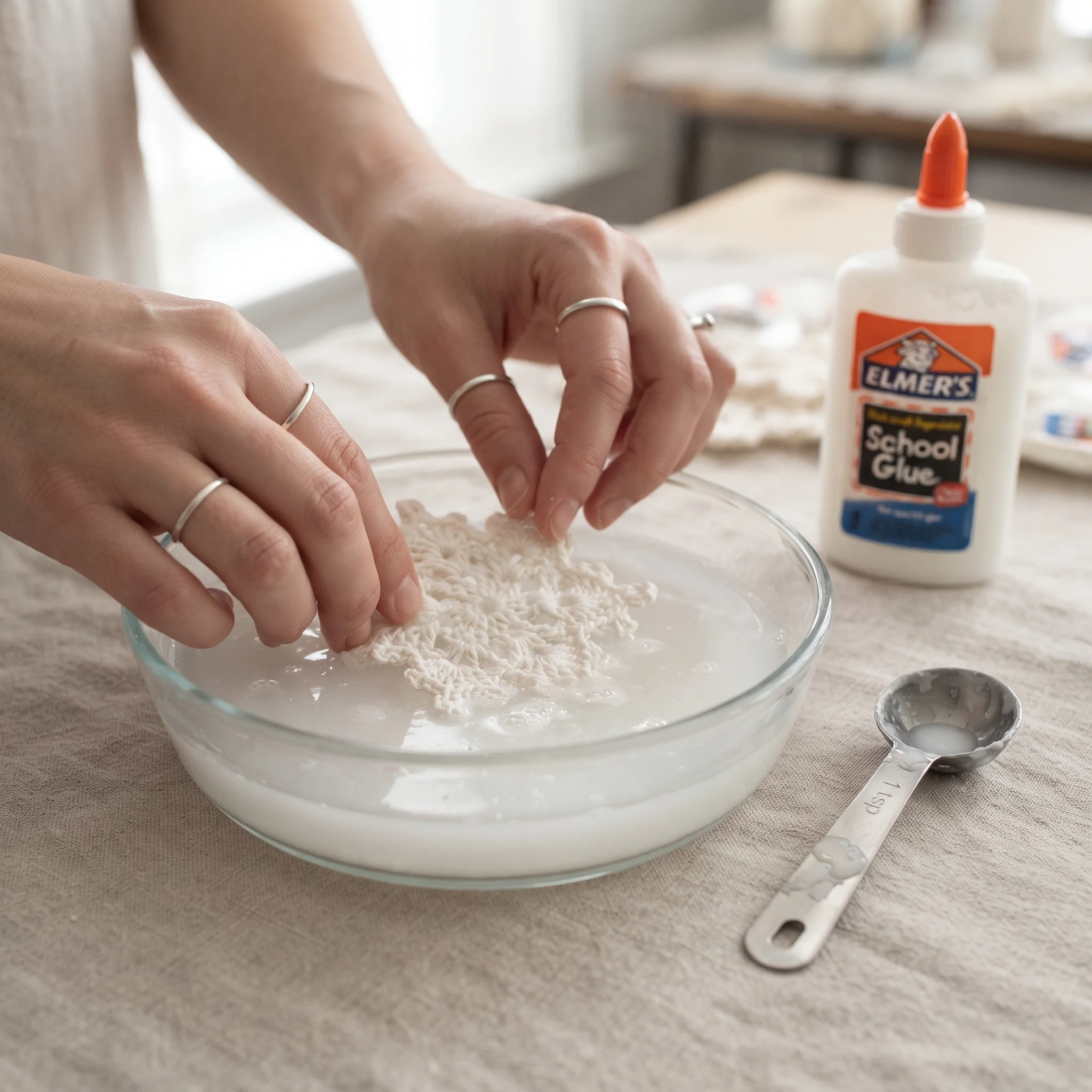
- Mix the glue and water in a bowl, stirring until smooth. Add water to the glue gradually rather than pouring glue into water, which makes it easier to blend.
- Soak your piece completely, pressing gently so the mixture reaches every stitch.
- Squeeze out the excess. Blot with a towel if needed.
- Clear any glue film from the holes by blowing through them or poking gently with a pin.
- Shape, pin and dry.
Pros and cons
Glue and water gives some of the stiffest homemade results, and you can easily adjust it. On the downside, a strong mix can slightly change the look of dark or bright yarn, sometimes adding a little shine or a faint white haze if too much is left on. Testing on a small swatch first is always a good idea.
Our crochet spider web earrings pattern uses equal parts glue and water, which keeps the delicate thread webs light, flat and comfortable to wear.
Method Three Starch
Starch is a gentle, traditional option that gives crochet a natural, soft structure rather than a hard shell.
Liquid starch can be bought ready made and used straight or diluted. The more water you add, the softer the result.
Homemade cornstarch is easy to make in your kitchen:
- Mix 1 tablespoon of cornstarch (also called cornflour) with half a cup of cold water.
- Heat gently in a saucepan, stirring constantly, until the mixture turns translucent and thickens slightly.
- Let it cool before using.
Soak your crochet, squeeze out the excess, then pin and dry as usual.
Pros and cons
Starch is inexpensive, gentle on fibers and easy to redo, which makes it a lovely choice for doilies and heirloom pieces you might want to wash and restarch later. However, it gives a softer hold than glue or commercial stiffener, so it isn’t the best choice for ornaments that must keep sharp points. Some starches can also yellow over time, especially in sunlight.
Method Four Sugar Water
Sugar water is the classic method many crocheters learned from their grandmothers. It creates a beautiful, crisp finish, but it comes with real drawbacks.
How to make it
- Combine sugar and water in a saucepan. Recipes range from equal parts to 2 parts sugar to 1 part water. More sugar gives a harder finish.
- Heat gently, stirring, until the sugar dissolves completely and the liquid turns clear.
- Let it cool before soaking your crochet.
The drawbacks to know before you choose it
- Pests. Sugar can attract ants and other insects, especially when ornaments are stored in a garage or attic.
- Humidity. Sugar absorbs moisture from the air. In humid weather, sugar stiffened pieces can turn sticky and limp, and in very humid places they may never fully dry.
- Weight. Sugar adds noticeable weight to small pieces, which can make delicate ornaments sag on a branch.
- Yellowing. Sugar can discolour over time, especially on white thread.
When it’s still a good choice
If you live in a dry climate and you’re making doilies or baskets for display rather than long term storage, sugar water can give a lovely, traditional result. For ornaments that will be packed away and brought out every year, glue or commercial stiffener is usually the safer choice.
Method Five Quick Fixes With Spray Starch or Hairspray
Sometimes you just need a little extra crispness, not a full stiffening.
Spray starch from the laundry aisle gives a light hold. Pin your piece flat, mist it evenly, let it dry, then repeat if needed.
Hairspray offers a very light, temporary hold. It can help a slightly droopy ornament or perk up a garland, but it won’t create lasting structure.
Both are best for touch ups rather than first time stiffening. They’re also handy if an already stiffened piece softens a little and you need a quick refresh before hanging it.
Stiffening Fine Thread Versus Thicker Yarn
The thickness of your yarn changes how you should stiffen it.
Fine crochet thread is used for delicate snowflakes, doilies and jewelry. Because each strand is thin, it soaks up stiffener quickly and can easily look heavy or shiny if the mix is too strong. Start with a lighter mix, such as 1 part glue to 4 parts water, and increase only if needed. Blot carefully, since thin thread holds less liquid before it starts to drip and pool.
DK and worsted yarn are thicker and absorb more stiffener. A 1:1 glue mix or full strength fabric stiffener usually works well. Give these pieces extra time to dry, because the center of each strand stays damp longer than the surface.
Chunky yarn is rarely stiffened, since it’s mostly used for blankets, bags and wearables. If you do need a chunky piece to hold a shape, such as a basket, use full strength commercial stiffener and allow at least a full day to dry.
Variegated and dark yarns can show stiffener residue more clearly. Always test a small swatch, and choose a clear drying product.
Which Method Is Best for Your Project
Here’s a quick guide to choosing the right method for common crochet projects.
| Project | Best method | Starting ratio or strength |
|---|---|---|
| Snowflakes | Glue and water or fabric stiffener | 1:1 glue to water; 1:4 for fine thread |
| Stars | Glue and water or fabric stiffener | 1:1 glue to water |
| Thread earrings and jewelry | Glue and water | 1:1 glue to water |
| Bells and 3D ornaments | Fabric stiffener or glue and water | Full strength or 2:1 glue to water |
| Flat garlands (bats, ghosts, pumpkins) | Fabric stiffener or glue and water | 1:1 or 1:2 glue to water |
| Spider webs | Fabric stiffener or glue and water | 1:1 glue to water |
| Doilies | Starch, or sugar in dry climates | Homemade starch or liquid starch |
| Baskets and bowls | Fabric stiffener or strong glue mix | Full strength or 2:1 glue to water |
| Items that will be washed | Don’t stiffen; use structure instead | Linings, inserts or interfacing |
Ornaments: Our crochet snowflake pattern and crochet star pattern both rely on stiffening to look their best. A 1:1 glue mix or fabric stiffener gives crisp points that last for years.
Bells: The open bell in our crochet bell ornament pattern holds its flare beautifully when lightly stiffened and dried over a small cone or upturned egg cup.
Halloween garlands.:Flat appliqués such as our crochet bat pattern, crochet ghost pattern and crochet pumpkin pattern stay flat and neat on a garland with a light stiffener. Join the pieces first, then stiffen the whole garland at once.
Spider webs: Our crochet spider web pattern uses a lovely trick: pin extra pins into the chain threads and pull them gently inward while the stiffener dries, so each ring curves like real spider silk.
Bags: Bags shouldn’t be stiffened with glue or sugar, since they’ll be handled and may need washing. Instead, structure comes from dense stitches, holding yarn double or adding a lining. Our chunky crochet bag pattern gets its structure from a double base and third loop stitches, with no stiffener needed.
How to Stiffen Crochet Step by Step
Whatever method you choose, the basic process is the same.
Step 1: Finish and weave in your ends. Stiffening locks everything in place, so weave in all your ends first.
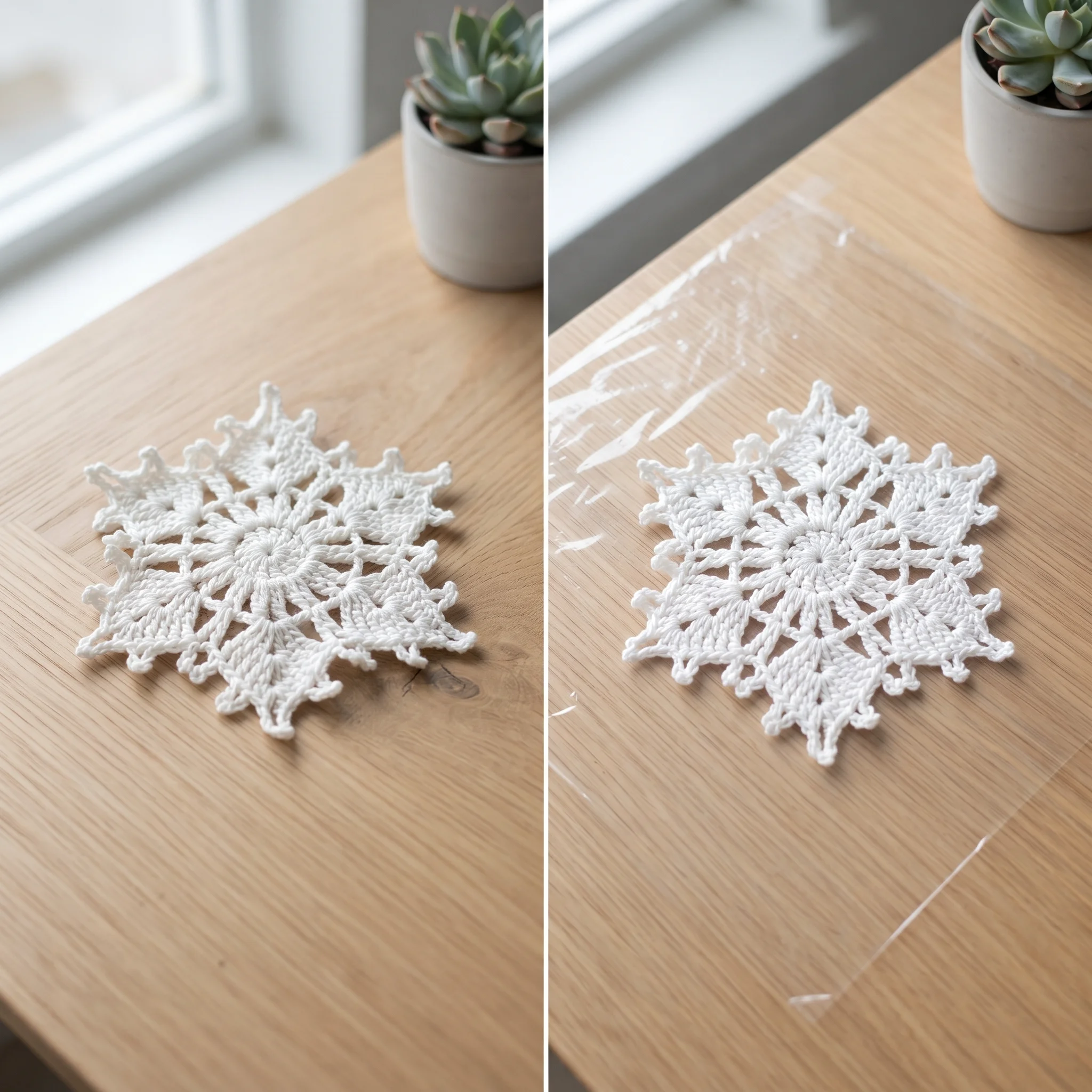
Step 2: Prepare your surface. Cover a blocking board or piece of cardboard with plastic wrap or a plastic bag, so your piece won’t stick as it dries.
Step 3: Test on a swatch. If you’re using a new method or a dark yarn, stiffen a small swatch first to check the color and finish.
Step 4: Mix your stiffener. Prepare your chosen solution and pour it into a shallow dish.
Step 5: Soak the piece. Submerge your crochet completely and press gently so the stiffener reaches every fiber.
Step 6; Remove the excess. Lift the piece out and squeeze gently. Never twist or wring it. Blot with a towel if it’s very wet.
Step 7: Clear the holes. Blow gently through lacy spaces or poke them open with a pin, so no film of stiffener dries across the gaps.
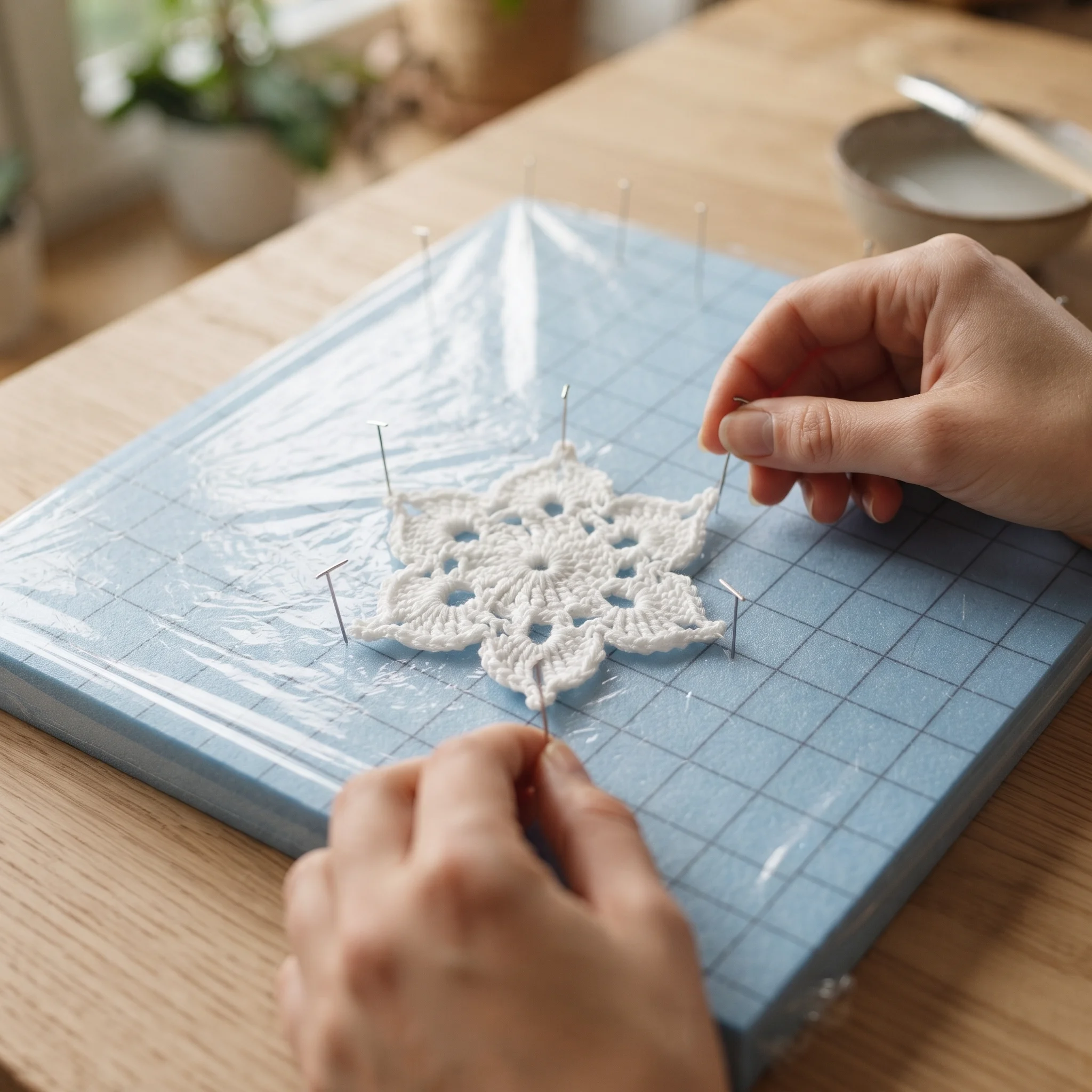
Step 8: Shape and pin. Lay the piece on your board and pin it into shape, starting at the center and working outward. Pin opposite points in turn, so the shape stays even.
Step 9: Let it dry completely. Leave it undisturbed, ideally overnight. Removing pins too early can let the shape relax.
Step 10: Check and repeat if needed. Once dry, test the stiffness. If it’s still too soft, apply a second coat and let it dry again.
Shaping Bells, Bowls and Baskets
Three dimensional pieces need a form to dry over, so they hold their shape.
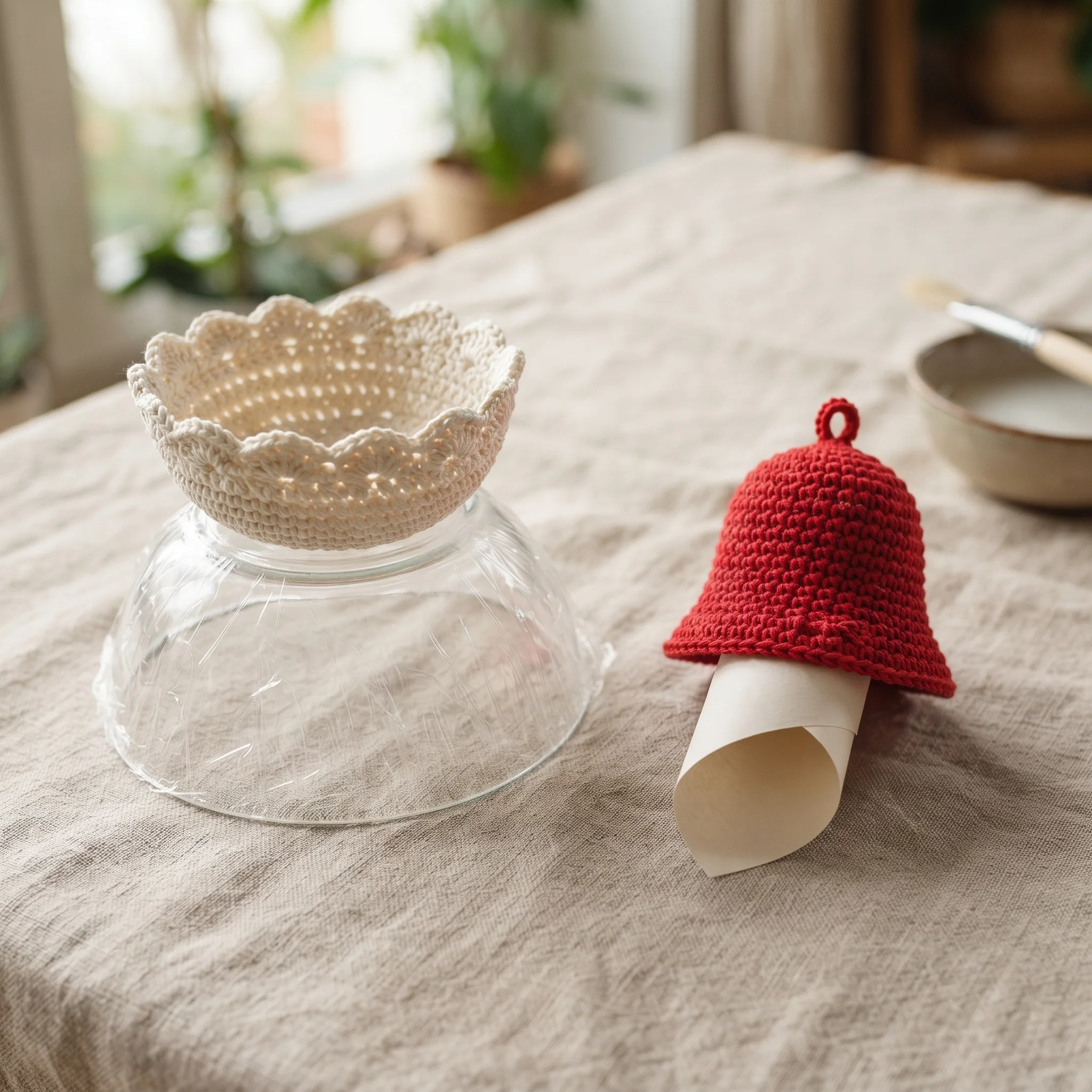
Choose the right form. Use anything with the shape you want: a glass bowl for a basket, an upturned egg cup or a cone of rolled card for a bell, a balloon for a round ornament or a bottle for a tall vase cover.
Cover the form. Wrap it in plastic wrap so the stiffened crochet releases easily once dry.
Stretch evenly. Place the soaked crochet over the form and gently ease it into shape, smoothing out wrinkles and making sure the edges sit evenly.
Use pins or clips where needed. For flared edges or scalloped borders, pin the edges onto a board or hold them in place with clothes pegs.
Dry fully before removing. Three dimensional pieces take longer to dry than flat ones. Give them at least a full day, then gently ease them off the form.
For balloons, let the piece dry completely, then pop the balloon and pull it out carefully. This works beautifully for round ornaments and small bowls.
Blocking Surfaces, Pins and Tools
The right tools make stiffening much easier.
Blocking mats. Foam blocking mats with grid lines are ideal, since they make it easy to pin symmetrical shapes. Cover them with plastic before stiffening.
Cardboard alternative. No mat? Wrap a piece of sturdy cardboard in plastic wrap and tape it at the back. It’s a cheap, effective blocking board for small pieces.
Rust proof pins. Always use stainless steel or rust proof pins. Ordinary pins can rust when wet and leave marks on your crochet.
Lots of pins. Lacy pieces need more pins than you might expect. Pinning each point of a snowflake or star keeps it crisp and symmetrical.
Shallow dishes and gloves. A shallow dish makes soaking easy, and thin gloves keep your hands clean, especially with commercial stiffener.
Drying Time and Your Climate
Drying time depends on your method, the thickness of your yarn and the air around you.
Typical drying times
- Small flat pieces such as snowflakes and earrings: several hours to overnight
- Larger flat pieces and garlands: overnight
- Three dimensional pieces such as bells and bowls: 24 hours or more
- Sugar water pieces: often longer than other methods
Humid climates
Humidity slows drying and can soften stiffened pieces over time. If you live somewhere humid, choose glue or commercial stiffener rather than sugar or starch, and let pieces dry in a well ventilated room. A gentle fan can help.
Don’t rush it with heat. It can be tempting to use a hair dryer or radiator, but direct heat can cause uneven drying, warping or discolouration. Gentle airflow is better than heat.
Common Stiffening Problems and How to Fix Them
Even experienced crocheters run into these issues. Here’s how to solve them.
Too sticky. The piece has too much stiffener left on it, or it’s sugar based in humid air. Rinse briefly in warm water, squeeze gently, and restiffen with a lighter mix. For sugar pieces, switch to glue or commercial stiffener.
Not stiff enough. The mix was too weak or the piece needed a second coat. Apply another coat, or use a stronger ratio next time.
Shiny finish. Too much glue. Use a weaker mix, such as 1 part glue to 2 parts water, and blot well after soaking.
White haze or cloudiness. Usually excess glue or stiffener drying on the surface. Blot more thoroughly before pinning, and make sure the mix is well blended.
Holes filled with film. Stiffener dried across the lacy spaces. Before it dries, blow through the holes or poke them with a pin. Once dry, you can carefully pierce the film with a pin.
Yellowing. Sugar and some starches can yellow over time, especially in sunlight. Use glue or commercial stiffener for white pieces you want to keep bright, and store them away from direct light.
Went limp in storage. Humidity has softened the stiffener. Restiffen the piece and store it somewhere dry.
Uneven shape. The piece moved while drying or was pinned unevenly. Dampen it, reshape and pin it again, starting from the center.
Storing, Restiffening and Removing Stiffener
Storing stiffened crochet
Store stiffened pieces flat in a box between layers of tissue paper, away from heavier decorations that could crush them. Keep them somewhere cool and dry, not in a damp garage or basement. If you used sugar, a sealed container helps keep pests away.
Re stiffening
Stiffened pieces can soften over time, especially in humid weather. That’s not a problem. Simply dampen the piece, apply a fresh coat of stiffener, pin it into shape and let it dry.
Removing stiffener
Because glue, starch and sugar are all water soluble, you can usually soften a stiffened piece by soaking it in warm water. Change the water a few times and gently squeeze until the piece feels soft again. Commercial stiffeners may take longer to soften, so check the product label.
Can you wash stiffened crochet?
Not without losing the stiffness. Every water based stiffener softens or dissolves when wet. If an item gets dirty, gently spot clean it with a slightly damp cloth, or wash it fully and restiffen afterwards.
Safety Tips for Stiffening Crochet
Choose non toxic glue. White PVA craft glue is generally non toxic and fume free, which makes it a good choice for home use.
Ventilate for commercial products. Some commercial stiffeners and sprays have a stronger smell. Use them in a well ventilated area and follow the label.
Keep sugar pieces away from pets. Pets may be attracted to the sweetness of sugar stiffened ornaments, so hang them out of reach.
Think about children. Stiffened ornaments can have sharp, hard points. For young children, a softer, unstiffened ornament may be safer to handle.
Protect surfaces. Stiffeners can mark wooden tables and fabrics. Always work on plastic or wax paper.
Quick Answers to Related Stiffening Questions
These are the questions crocheters often ask next, with short answers and links to our detailed guides.
Stiffening Versus Blocking
Blocking relaxes and shapes crochet using water or steam, which is perfect for blankets and garments. Stiffening coats the fibers to hold a firm shape. Many projects need both. Our guide on how to block crochet blankets, granny squares and sweaters explains blocking step by step.
Stiffening Amigurumi
Amigurumi don’t need stiffening. They hold their shape through tight stitches and firm, even stuffing. If yours looks lumpy or soft, the fix is usually in the stuffing and decreases, which our upcoming guide on why amigurumi look lumpy explains.
Giving Crochet Bags Structure
Bags need structure that survives handling and washing, so glue and sugar aren’t suitable. Use dense stitches, hold yarn double, add a lining or use a firm insert in the base. Our crochet tote bag pattern gets its structure from thick ribbon cord and a woven stitch.
Christmas Ornaments That Last
Stiffened ornaments can be brought out year after year. For the best results, use glue or commercial stiffener, store them flat and keep them dry. Our Christmas crochet patterns and ideas guide includes nine ornament and gift patterns to stiffen and enjoy.
Selling Stiffened Ornaments
Stiffening adds time and materials, so include them when you price your work. A set of stiffened snowflakes or stars makes a popular holiday market item. Our guide on how much to charge for crochet items shows you how to price fairly.
Making a Crochet Garland
Garlands look best when every piece is stiffened to the same firmness. Join the pieces first, then stiffen the whole garland at once so they dry evenly. Our upcoming guide on how to make a crochet garland covers spacing, joining and hanging.
Frequently Asked Questions
Give Your Crochet Shape That Lasts
Stiffening crochet doesn’t have to be confusing. Choose your method by project and climate, start with the ratios in this guide, pin carefully and give your pieces plenty of time to dry. For most ornaments, snowflakes, stars and jewelry, equal parts glue and water or a commercial stiffener will give you crisp, lasting results.
With a little practice, every snowflake will hold its points, every bell will keep its flare and every garland will hang beautifully, year after year.
Ready to put it into practice? Try our free crochet snowflake pattern or explore our free crochet appliqué patterns.
Make Something Worth Stiffening